




.webp)
%20(1).jpg)
.webp)
.jpg)
.jpg)
From Russia with love: The ‘other’ Russian conflict targeting intellectual property owners
Russia’s tactical measures associated with the conflict which could have serious and long-lasting consequences for both the country of Russia and intellectual property owners across the world.


Russia’s war with Ukraine has rightly not been far from the public’s mind over the past couple of months. The war is having, and will continue to have, tragic consequences for the people of Ukraine. However, it is another of Russia’s tactical measures associated with the conflict which could have serious and long-lasting consequences for both the country of Russia and intellectual property owners across the world.
In an effort to bring pressure on Russia numerous countries have imposed significant economic sanctions on Russia. And numerous global businesses, including Apple, McDonald’s, Coca-Cola, Mercedes Benz, Ikea and Starbucks are rapidly downsizing or ceasing operations in Russia. This mass corporate exodus has caused significant logistical and supply chain disruptions in the technology and retail sectors, with many Russian businesses quickly looking to fill the growing gaps in consumer demand.
Russia’s ‘war’ with international patent and design owners
Part of the Russian government’s response to the international sanctions was to launch a second (or third if you include the cyber-attacks) attack of the year against international intellectual property owners. It issued a decree on 6 March 2022 effectively allowing Russian entities to use patents, utility models or industrial designs without paying licence fees, or being at risk of damages for infringement, where the owner is from a country which imposed economic sanctions and/or has carried out “unfriendly activities” towards Russia.
So far, those countries include the United Kingdom, European Union, the USA, Canada, Japan, South Korea, Singapore, and of course Australia and New Zealand.
The decree is broad, and affects owners who are citizens or residents, headquartered in or even receiving significant revenue from those ‘unfriendly’ countries.
The Russian government has, in one fell swoop, effectively gone further than the large-scale nationalisation efforts developing countries undertook in the 1960’s and 70’s, by expropriating intangible property and intellectual property rights from foreign owners.
What’s the likely impact?
The decree expropriating patent and design rights means that Russian entities can now exploit patents and registered designs without consent, and the owners cannot enforce their rights, receive damages for infringement or licence fees for use of those rights.
The economic impacts and sanctions will last long after the shelling finally stops, with the US and EU discussing Russia effectively being a global pariah for the foreseeable future.
In those circumstances, it is unlikely that even if Russian patents and designs could be enforced during their term, owners will have sufficient interests in Russia to justify doing so. Intellectual property owners are now in an invidious position. Even if they can renew their registrations - the sanctions mean it will be difficult or impossible to pay renewal fees - owners may simply decide to abandon their registrations in Russia.
While Russia’s actions may have a short-term gain for Russian entities, foreign investment will be significantly curtailed. Similarly, innovative entities are unlikely to risk transferring or commercialising sensitive technology or data into Russia for a considerable period. This will ultimately stifle the flow of technology and innovation to Russia and reduce its productivity and growth in the long run.
But what about other intellectual property rights?
Despite the decree only explicitly covering patents, utility models and industrial designs, it has the potential to affect other intellectual property rights in Russia, including copyright and trade mark rights. In fact, Russia’s Ministry of Economic Development has hinted that further decrees could be on the way, including (temporarily) removing trade mark and copyright protections for owners based in ‘unfriendly’ countries.
Rospatent, Russia’s Federal intellectual property office has recently received an influx of trade mark applications for famous and luxury brands like Givenchy, Christian Dior, Chanel, Nike, BMW and Audi from applicants that aren’t the marks’ owners. There is a good chance some of these applications will be registered, as even pre-decree, Rospatent was not able to refuse trade mark applications on the express basis that they were filed in bad faith.
One high-profile example is a trade mark application for ‘Uncle Vanya’ for restaurant services, along with the following logo:
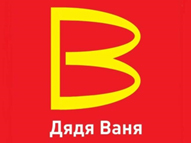
If the logo looks familiar, it won’t be a surprise that the trade mark application was filed shortly after senior Russian officials declared all McDonald’s restaurants in Russia should be replaced by a new burger chain called Uncle Vanya, presumably coming to Russian towns everywhere soon.
If Russia issues another decree removing trade mark rights for owners based in ‘unfriendly’ countries, the decree will likely mean that applications such as this would be registered as Rospatent examiners would be prevented from considering existing trade marks owned by ‘unfriendly’ foreign owners.
Additionally, the Russian courts appear to have already declared open season on other forms of intellectual property rights.
One relatively high-profile recent case involves Peppa Pig. Peppa Pig’s UK based owners (Entertainment One UK) was bought by Hasbro Inc, a US entity – both are based in ‘unfriendly’ countries. They brought trade mark and copyright infringement proceedings against a Russian national. The Russian District Court dismissed infringement proceedings. In its judgment, the court specifically referred to Britain’s and the United States’ sanctions against Russia as justification for its decision to allow the Peppa Pig trade marks to be used without consent
Services in this insight

Open banking standards to be managed by MBIE
Not fooling around – "The Meme Bill" approaches second reading, but how will it actually work here?
"Now is the time to act" – Reserve Bank seeks feedback on modernising New Zealand’s retail payment system
Global AI shut down – What the United States export controls on AI mean for New Zealand businesses
Fair Trading Act reform – More agile product safety standards
Fair Trading Act reform – New "safe harbour" for suspected scam activity
Fair Trading Act reform – Changes will increase governance risk for business
New Zealand’s online gambling laws get a shake up
Consultation opens on New Zealand's payment services regulation
Modern slavery regulation on the way – Is your business ready?
From Hertzian waves to hyperlinks – What the BSA’s online decision means for your business
Space Law in New Zealand — Signals from the ground
Cyber security changes flagged for New Zealand
The four Cs of successful fintech partnerships
New rule 3A introduced to the Biometric Processing Privacy Code
IPP3A is nearly in force – What agencies need to know
OPC shifts public enquiries online – What agencies should do now
AI as a confidante? Legal privilege and the ever-increasing use of AI
New Therapeutic and Health Advertising Code – What you need to know
Building blocks of trade mark law: New Zealand approach to "use as a trade mark" now compatible with Australia
Consumer law update 2025
Open banking launches in New Zealand
Is fair something to fear? The Government announces beefed-up Fair Trading Act
Is it fair? Lessons from Bartz v Anthropic and Kadrey v Meta
Open banking almost live
Why New Zealand businesses should care about the EU Data Act
Product labelling changes flagged for New Zealand
Biometric Processing Privacy Code 2025 introduced to New Zealand
Open banking regulations released for consultation
Ten tips for buy-side M&A success
A recipe for disaster – Is caramel a copyright work?
Becoming a Globally Renowned Fintech Nation (and how regulation can light the path)
Important changes made to the Privacy Act
New Zealand may ban social media for young users
Customer and Product Data Act update – Open banking officially on the way
Tips from the trenches – Your AI policy cheat sheet
Significant regulatory reform proposed for New Zealand media
Security guidance released for emerging tech companies
Customer and Product Data Bill – Select Committee reports back
Consumer law update 2024
New Zealand’s Artist Resale Royalty is ready to go
The shape of coffee – “Moccona” vs “Vittoria”
New Zealand’s Copyright Act gets a sense of humour
WIPO’s traditional knowledge treaty is adopted
Doing business in the Middle East
AI and advertising – What producers need to know
Seven contract clauses every freelancer needs
Baby Reindeer – When truth is stranger than fiction?
Our comments on the Biometric Processing Privacy Code
Therapeutic Products Act to be repealed this year
Is End-to-End to end?
Geographical indications – Changes uncorked by the EU-NZ Fair Trade Agreement
Lawyers and Generative AI – New NZ Law Society guidance released
Facing the future – A biometrics code of practice for New Zealand?
Deepfakes and style mimicking – Should New Zealand adopt a right of publicity?
Five Eyes release the Five Principles to Secure Innovation
The copyright conundrum with generative AI
Innovate at the speed of trust – Privacy Commissioner releases new guidance on artificial intelligence tools
Political advertising on social media: sludge or copyright quagmire?
Privacy Amendment Bill introduced to Parliament
New Data Privacy Framework: Meta gets a lifeline
The long and winding road to royalties
Implications of the Supreme Court’s “new debt” approach in Mainzeal
EU gets closer to AI laws
UK Supreme Court puts Quincecare ‘duty’ back in its box
A Deep Dive into The Customer and Product Data Bill
Searching for a shield: Meta’s €1.2 billion fine and international transfers in the age of Big Data
New NZ-UK Free Trade Agreement signals tech, media and IP law changes
Ditch the fax! Tips for building a tech-savvy law firm
The Incorporated Societies Act 2022 – what you need to know for your society
Common myths about copyright online
Artificial artist, or artificial plagiarist?
Big boost to gaming
Is your product “AI powered”?
The latest on New Zealand’s Consumer Data Right
Space Law in New Zealand
You Cannot Defame the Dead or Can You? Tikanga Māori and NZ Defamation Law
Open Banking is coming – through the Consumer Data Right
Massive SEC Fines for Companies Using Text and Instant Messaging
One Act to Rule Them All
A Legal Guide to Kicking SaaS
Potential changes to the Privacy Act 2020
NZ's Social Media "Code of Practice" Launched
Are you being unfair?
Are you legal?
Power Up 2022
A new Companies Office levy is one step closer
Has Paramount Pictures gone maverick?
From Russia with love: The ‘other’ Russian conflict targeting intellectual property owners
I'm back, baby
Retail Payment System Act 2022 now in force
Paying the price for getting privacy wrong
Can AI be an inventor?
Finfluencer Crackdown
TIN Fintech Insights Report Launch
Britain seeks to regulate 'Big Tech'
Disclosure of personal information - how to, not don't do
The Spice May Flow, But The Copyright Doesn’t
Sound Recording Ownership (Taylor's Version)
The Lowdown (and Lockdown) on Summer Clerkships
Other articles you
might like
.webp)
New Zealand is edging closer to a parody and satire exception to copyright infringement.



A recent Court of Appeal decision provides long awaited clarity for businesses on the lawful use of another party’s trade mark in New Zealand.

.jpg)
Two contrasting court judgments have been released on whether it is legal to train LLMs using copyright protected works.