




.webp)
%20(1).jpg)
.webp)
.jpg)
.jpg)
The shape of coffee – “Moccona” vs “Vittoria”
The Australian Federal Court heft meer doubt as to expert evidence in bitter trade mark dispute about coffee jars.
.jpg)

In a case heard by Justice Wheelahan of the Australian Federal Court recently, Dutch coffee giant Koninklijke Douwe Egberts BV (KDE), the owner of the MOCCONA brand, brought allegations of trade mark infringement, breaches of the Australian Consumer Law (Schedule 2 to the Competition and Consumer Act 2010 (Cth)), and passing off against Australian company Cantarella Bros Pty Ltd (Cantarella), which sells coffee under the VITTORIA brand. Cantarella cross-claimed for the removal of the KDE shape mark from the register on several grounds including distinctiveness and that KDE had no intention to use the mark.
In its 7 November 2024 judgment, the Court dismissed all of the parties’ claims, maintaining the status quo in the Australian instant coffee jar market. At 156 pages, the decision is hefty and covers several aspects of Australian trade mark law – we’ve picked out a few of the tasty bits as they relate to New Zealand law.
Background
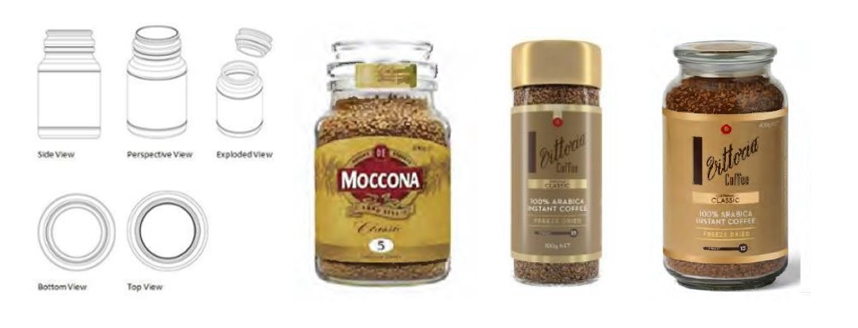
KDE owns a trade mark registration in Australia for the 3D shape of its coffee jar (Shape Mark). The Shape Mark was registered with effect from 7 January 2013 and has been used by KDE to sell its MOCCONA branded instant coffee in Australia since October 1977 (if not before).
Cantarella was incorporated in Australia in 1951. Its VITTORIA brand for coffee products was launched in 1958 and, by 2023, was the highest selling brand by value in Australia in the bean and ground coffee market. In 2021, Cantarella launched a 100-gram freeze-dried instant coffee product sold in a cylindrical glass jar with a gold-coloured plastic lid. In 2022, Cantarella then expanded this range to a 400-gram freeze-dried instant coffee product, sold in a cylindrical glass jar with a glass stopper lid. KDE took issue with the new VITTORIA jars and so the dispute arose.
The Shape Mark registration, and examples of the MOCCONA jar and VITTORIA jars, are below:
Registering shape marks
Shape marks are relatively uncommon in New Zealand – there are only approximately 550 live registrations as at the time of writing. This is because, typically, trade mark applications for shape marks face objections, oppositions or invalidity actions based on a lack of distinctiveness, especially where they consist of a shape alone and/or are purely functional. In many instances, registration can be achieved (and maintained) by submitting evidence of acquired distinctiveness through use.
One of the grounds on which Cantarella attacked the Shape Mark registration was exactly that – Cantarella argued that the Shape Mark was, at the relevant date, not inherently adapted to distinguish, and did not in fact distinguish, KDE’s goods from the goods of other traders.
In rejecting this cross-claim, the Australian Federal Court accepted that the Shape Mark was not inherently adapted to distinguish but found that it had been used to such an extent and over a sufficient period of time that it had become distinctive of KDE’s products. A number of factors led to this conclusion –
• There were numerous coffee jars and containers in evidence but within the diversity of shapes and sizes, the MOCCONA jar was distinct;
• The jars, without any labels or visual embellishment, had featured prominently in several television commercials for MOCCONA coffee – this is a pivotal factor for brand owners to be aware of; and
• From the evidence, KDE appeared to have been the only user of the shape in Australia in relation to coffee for a period of almost 20 years before the priority date of the Shape Mark application.
The actual extent of use relied on is difficult to evaluate because KDE’s advertising expenditure and sales revenue figures were detailed in confidential evidence. But based on the references to ads in the Court’s decision, it seems that the advertising by KDE in Australia included several free-to-air and pay TV commercials, which presumably reached national audiences, and online advertisements (e.g. via YouTube), some of which had close to 500,000 views.
A peculiarity of New Zealand law is that it offers 16 years (or 25 years if the drawings are works of artistic craftsmanship) of automatic copyright protection against the unauthorised mass reproduction of a three-dimensional product which reproduces a two-dimensional drawing. This is not the case in Australia. Some businesses in New Zealand choose to rely on this protection to avoid the “acquired distinctiveness” hurdle of trade mark registration, though there are limitations/challenges with copyright enforcement too. Note also that copyright/design protection is time limited, whereas trade mark protection can be a perpetual intellectual property right (if renewed).
What is use of a shape mark "as a trade mark"?
As in New Zealand, Australian trade mark law requires that for there to be infringement the allegedly infringing sign must have been used as a trade mark. This is of course a highly fact specific assessment and contextual factors are important.
In this case, KDE failed to show that the shape of the VITTORIA jar itself had been used as a trade mark (i.e. badge of origin). The Australian Federal Court concluded that the VITTORIA jar is "relatively plain", there was no evidence that Cantarella had advertised its products in unbranded jars, and use of the jar in advertising and promotional materials did not draw express attention to the shape of the jar itself. Regarding use in advertising, the Court noted that "simply displaying a picture of a product in its packaging does not entail that the shape of the packaging will be used as a trade mark — even though the packaging will almost always be bigger than the label affixed to it.…Without more, featuring a product in its packaging as part of an advertisement does not constitute trade mark use”.
The Court was also of the view that while purchasers of instant coffee do not spend a long time deciding which products to buy, there was no “real, tangible risk that a notional buyer, with a recollection only of the KDE shape mark’s rough proportions and general shape, would be perplexed, mixed up, caused to wonder, or left in doubt, about whether instant coffee sold in the Cantarella jar shape has the same commercial source as coffee sold in the KDE shape mark”.
Expert evidence
An interesting observation from the decision relates to the expert evidence submitted by the parties.
The Court stated that such evidence did “not greatly assist in deciding [the] issues” because it focussed on, and used the language of, the field of marketing, not trade mark law. The Court acknowledged that this was not a criticism because the experts were asked to give evidence based on their expertise, which was in marketing and not law.
The Court also found the evidence unhelpful because it addressed issues that are, ultimately, for the Court to decide, noting that “[t]his is not a trial by expert” and “the Court’s task is not simply to weigh the opinions of experts on these questions”. There was also doubt raised as to whether the studies relied on in the expert evidence objectively supported the experts’ views or if the evidence simply reflected the experts’ own extrapolation from the studies cited.
Having regard to these limitations, careful thought should be given to the relevance and usefulness of expert evidence in a trade mark dispute, especially given the expense of getting it. If the key questions in the dispute are questions of fact for the Court to determine by reference to legal standards – such as use of a sign as a mark of origin, deceptive similarity, and misleading and deceptive conduct – expert marketing evidence may be of little utility.
If this discussion raises trade mark questions for your business, please get in touch.
Services in this insight

Open banking standards to be managed by MBIE
Not fooling around – "The Meme Bill" approaches second reading, but how will it actually work here?
"Now is the time to act" – Reserve Bank seeks feedback on modernising New Zealand’s retail payment system
Global AI shut down – What the United States export controls on AI mean for New Zealand businesses
Fair Trading Act reform – More agile product safety standards
Fair Trading Act reform – New "safe harbour" for suspected scam activity
Fair Trading Act reform – Changes will increase governance risk for business
New Zealand’s online gambling laws get a shake up
Consultation opens on New Zealand's payment services regulation
Modern slavery regulation on the way – Is your business ready?
From Hertzian waves to hyperlinks – What the BSA’s online decision means for your business
Space Law in New Zealand — Signals from the ground
Cyber security changes flagged for New Zealand
The four Cs of successful fintech partnerships
New rule 3A introduced to the Biometric Processing Privacy Code
IPP3A is nearly in force – What agencies need to know
OPC shifts public enquiries online – What agencies should do now
AI as a confidante? Legal privilege and the ever-increasing use of AI
New Therapeutic and Health Advertising Code – What you need to know
Building blocks of trade mark law: New Zealand approach to "use as a trade mark" now compatible with Australia
Consumer law update 2025
Open banking launches in New Zealand
Is fair something to fear? The Government announces beefed-up Fair Trading Act
Is it fair? Lessons from Bartz v Anthropic and Kadrey v Meta
Open banking almost live
Why New Zealand businesses should care about the EU Data Act
Product labelling changes flagged for New Zealand
Biometric Processing Privacy Code 2025 introduced to New Zealand
Open banking regulations released for consultation
Ten tips for buy-side M&A success
A recipe for disaster – Is caramel a copyright work?
Becoming a Globally Renowned Fintech Nation (and how regulation can light the path)
Important changes made to the Privacy Act
New Zealand may ban social media for young users
Customer and Product Data Act update – Open banking officially on the way
Tips from the trenches – Your AI policy cheat sheet
Significant regulatory reform proposed for New Zealand media
Security guidance released for emerging tech companies
Customer and Product Data Bill – Select Committee reports back
Consumer law update 2024
New Zealand’s Artist Resale Royalty is ready to go
The shape of coffee – “Moccona” vs “Vittoria”
New Zealand’s Copyright Act gets a sense of humour
WIPO’s traditional knowledge treaty is adopted
Doing business in the Middle East
AI and advertising – What producers need to know
Seven contract clauses every freelancer needs
Baby Reindeer – When truth is stranger than fiction?
Our comments on the Biometric Processing Privacy Code
Therapeutic Products Act to be repealed this year
Is End-to-End to end?
Geographical indications – Changes uncorked by the EU-NZ Fair Trade Agreement
Lawyers and Generative AI – New NZ Law Society guidance released
Facing the future – A biometrics code of practice for New Zealand?
Deepfakes and style mimicking – Should New Zealand adopt a right of publicity?
Five Eyes release the Five Principles to Secure Innovation
The copyright conundrum with generative AI
Innovate at the speed of trust – Privacy Commissioner releases new guidance on artificial intelligence tools
Political advertising on social media: sludge or copyright quagmire?
Privacy Amendment Bill introduced to Parliament
New Data Privacy Framework: Meta gets a lifeline
The long and winding road to royalties
Implications of the Supreme Court’s “new debt” approach in Mainzeal
EU gets closer to AI laws
UK Supreme Court puts Quincecare ‘duty’ back in its box
A Deep Dive into The Customer and Product Data Bill
Searching for a shield: Meta’s €1.2 billion fine and international transfers in the age of Big Data
New NZ-UK Free Trade Agreement signals tech, media and IP law changes
Ditch the fax! Tips for building a tech-savvy law firm
The Incorporated Societies Act 2022 – what you need to know for your society
Common myths about copyright online
Artificial artist, or artificial plagiarist?
Big boost to gaming
Is your product “AI powered”?
The latest on New Zealand’s Consumer Data Right
Space Law in New Zealand
You Cannot Defame the Dead or Can You? Tikanga Māori and NZ Defamation Law
Open Banking is coming – through the Consumer Data Right
Massive SEC Fines for Companies Using Text and Instant Messaging
One Act to Rule Them All
A Legal Guide to Kicking SaaS
Potential changes to the Privacy Act 2020
NZ's Social Media "Code of Practice" Launched
Are you being unfair?
Are you legal?
Power Up 2022
A new Companies Office levy is one step closer
Has Paramount Pictures gone maverick?
From Russia with love: The ‘other’ Russian conflict targeting intellectual property owners
I'm back, baby
Retail Payment System Act 2022 now in force
Paying the price for getting privacy wrong
Can AI be an inventor?
Finfluencer Crackdown
TIN Fintech Insights Report Launch
Britain seeks to regulate 'Big Tech'
Disclosure of personal information - how to, not don't do
The Spice May Flow, But The Copyright Doesn’t
Sound Recording Ownership (Taylor's Version)
The Lowdown (and Lockdown) on Summer Clerkships
Other articles you
might like
.webp)
New Zealand is edging closer to a parody and satire exception to copyright infringement.



A recent Court of Appeal decision provides long awaited clarity for businesses on the lawful use of another party’s trade mark in New Zealand.

.jpg)
Two contrasting court judgments have been released on whether it is legal to train LLMs using copyright protected works.